
Introduction
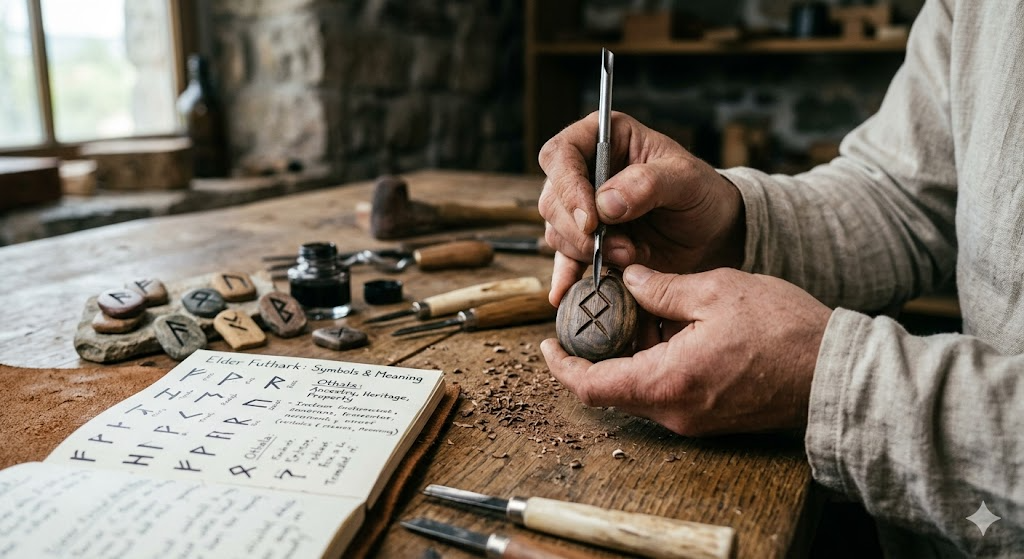
Elder Futhark translation is a fascinating doorway into the ancient world of Norse runes, offering insight into the communication and symbolism of early Germanic tribes. These 24 runes, carved into stones, weapons, and personal items, hold a rich history of language, art, and spirituality. Translating these symbols allows modern readers to uncover the messages and meanings embedded by Vikings, creating a bridge between the past and present understanding of Norse culture.
Learning elder futhark translation not only helps decode historical inscriptions but also inspires creative applications in art, jewellery, and personal symbolism. By understanding the phonetics, structure, and deeper meanings of each rune, enthusiasts can accurately interpret inscriptions or design meaningful compositions. This guide provides a comprehensive look at elder futhark translation, covering everything from individual rune meanings to practical uses and online translation tools.
What is the Elder Futhark?
The Elder Futhark is the oldest form of the runic alphabet, originating around the 2nd century AD and used widely across Northern Europe. Comprising 24 distinct symbols, each rune carries both a phonetic value and symbolic meaning. The name “Futhark” is derived from the first six runes: Fehu, Uruz, Thurisaz, Ansuz, Raidho, and Kenaz. Understanding these foundational characters is essential for anyone attempting elder futhark translation.
Unlike modern alphabets, the Elder Futhark was not only a tool for communication but also a spiritual and magical instrument. Runes were often inscribed on objects for protection, guidance, or ceremonial purposes. Mastering elder futhark translation allows enthusiasts to interpret these inscriptions correctly, revealing the practical and mystical roles that runes played in ancient society. This dual purpose of communication and symbolism makes the Elder Futhark uniquely significant in both historical and cultural studies.
Understanding Elder Futhark Translation
Elder futhark translation involves converting English or modern text into the ancient runic script while preserving meaning and phonetics. It requires understanding that the runes were initially designed for Old Norse sounds, which do not always correspond exactly to modern English letters. Accurate translation involves both transliteration, mapping letters to runes, and interpretation, considering the cultural and symbolic meaning of each rune.
Translating words without considering context can lead to inaccuracies. For example, some sounds in English have no direct rune equivalent, and multiple runes may represent a single phoneme. Therefore, elder futhark translation is not merely a letter-for-letter process but also a study of linguistic patterns, historical usage, and symbolic resonance. By mastering these aspects, anyone can produce translations that are both accurate and meaningful.
The Complete Elder Futhark Rune Meanings
Each rune in elder futhark translation holds a unique combination of sound and symbolic meaning. For instance, Fehu signifies wealth and prosperity, while Uruz represents strength and vitality. Ansuz relates to communication and divine wisdom, and Raidho is linked to journeys and travel. Understanding these meanings is crucial for translating words and phrases accurately, as it provides insight into the intent behind inscriptions.
Using a comprehensive rune chart greatly enhances elder futhark translation. By cross-referencing each rune’s phonetic value and symbolic interpretation, translators can maintain accuracy while appreciating the deeper significance of the runes. This knowledge is valuable not only for historical study but also for personal projects, artistic designs, and spiritual exploration, ensuring that translations respect both language and meaning.
How to Translate English into Elder Futhark
Translating English into Elder Futhark requires a systematic approach. Start by breaking words into individual letters and identifying phonetic equivalents in the runic alphabet. Some sounds, such as “th” or “ng,” have specific runes, so careful attention is needed to avoid errors. Manual translation helps reinforce understanding of both phonetics and symbolism, making elder futhark translation a learning process rather than a mechanical task.
Practice is essential when performing elder futhark translation manually. Beginners often make the mistake of doubling runes unnecessarily or misrepresenting vowel sounds. By starting with simple words and gradually progressing to complex phrases, learners develop both confidence and precision. Regular practice improves accuracy, allowing for consistent translations suitable for educational purposes, creative projects, or historical interpretations.
Tools and Online Translators
Online tools have made elder futhark translation more accessible, providing instant conversion from English to runes. Websites and applications allow users to enter text and receive a runic representation in seconds, making them ideal for beginners, designers, or casual enthusiasts. These tools save time and help visualise the translation process for those who are unfamiliar with the entire alphabet.
However, digital tools are not foolproof. They may lack historical accuracy or fail to consider symbolic nuances, which are vital in elder futhark translation. Combining online tools with manual study ensures both correctness and cultural integrity. Understanding each rune’s meaning alongside digital conversion maintains the balance between convenience and authenticity, allowing users to create meaningful and accurate translations.
Practical Uses of Elder Futhark Translation
Elder futhark translation has diverse applications, ranging from creative to academic. Many people use runes in tattoos, jewellery, or art to convey personal significance. Scholars and historians rely on translation to interpret inscriptions and learn about Viking beliefs, customs, and social structures. The versatility of elder futhark translation allows it to serve both practical and aesthetic purposes.
Beyond art and research, elder futhark translation can be used in spiritual practices such as rune readings or meditation. Each rune carries symbolic energy, and understanding this meaning enhances personal exploration or ritual use. Practising translation regularly deepens knowledge, fosters cultural appreciation, and ensures the ongoing relevance of the Elder Futhark in modern times.
Tips for Learning and Memorising Elder Futhark
Memorising all 24 runes for effective elder futhark translation is easier with structured methods. Flashcards, visual charts, and mnemonic devices help retain both the symbols and their meanings. Practising regularly, even with simple words or names, reinforces memory and understanding, making translation more intuitive.
Combining phonetic learning with symbolic interpretation is key to mastery. Writing phrases, tracing runes, or using online tools alongside manual practice enhances retention. Gradually, learners gain confidence in translating text accurately, producing translations that are both linguistically and culturally meaningful. These techniques ensure that elder futhark translation becomes a skill accessible to anyone willing to invest time and effort.
Conclusion
Elder futhark translation offers a unique opportunity to connect with Viking history, language, and culture. By learning the alphabet, understanding rune meanings, and practising accurate translation, enthusiasts can explore both linguistic and symbolic dimensions of the runes. The art of translation preserves cultural heritage while allowing modern applications in art, design, and spiritual practice.
Mastering elder futhark translation requires patience, study, and respect for historical context. Whether for personal projects, academic research, or creative expression, understanding the runes provides insight into the ancient world. With regular practice and careful interpretation, anyone can gain confidence in translating English into these powerful and symbolic characters.