
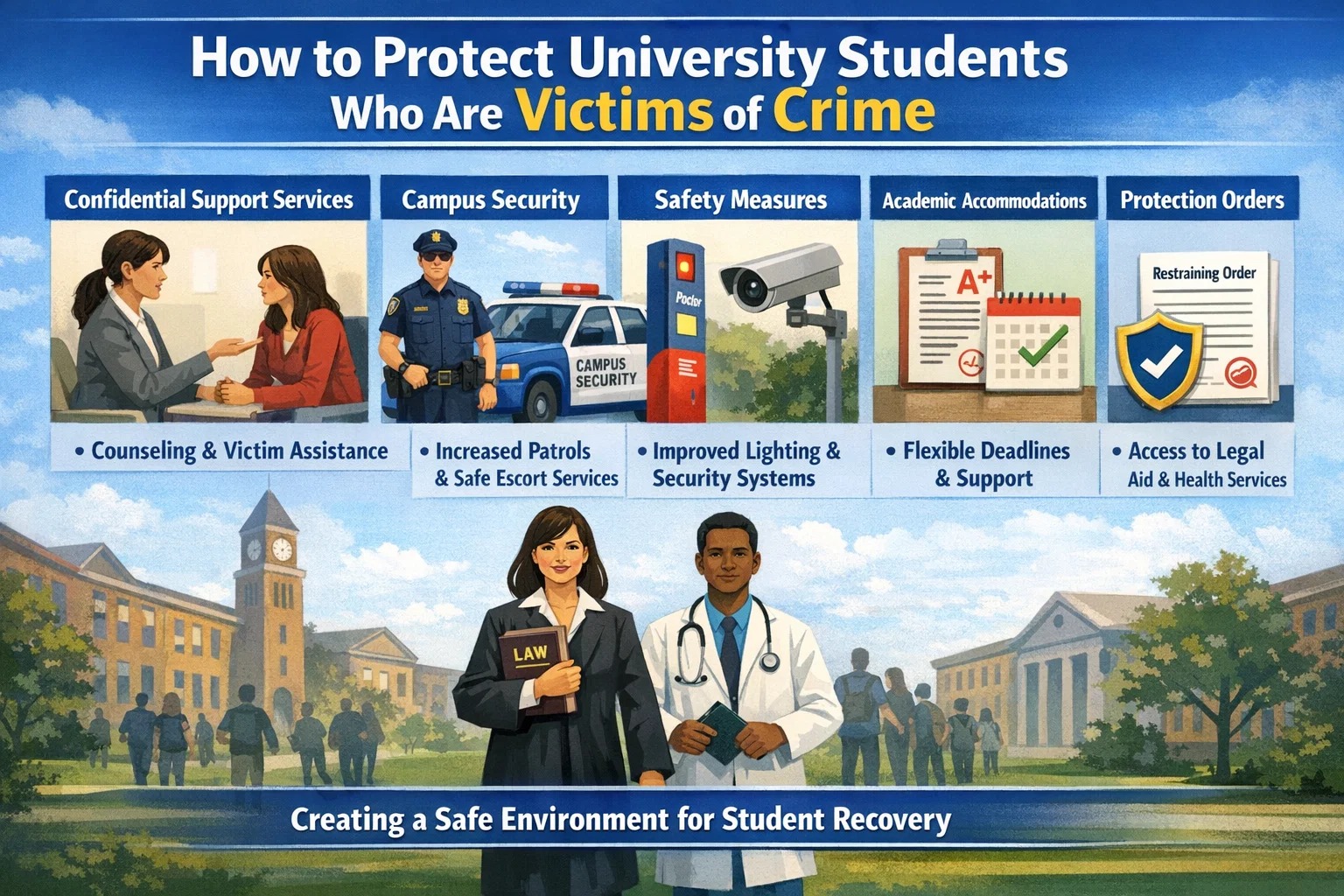
Students need to feel safe attending university in order to be able to concentrate on their studies. Students who have become victims of crime deserve more than just the ability to report their crime; they require legal assistance, emotional support and practical assistance. Students have the right to report crimes to the police, to seek police intervention for protection from future crimes through restraining orders, and to obtain legal assistance if necessary.
Yet, if you still face any challenge, feel free to seek assignment help UK. Women are included as victims and have the same rights as any other student to protection. University administrators and law enforcement officials play a key role in ensuring that both women and men are afforded a safe environment to learn and complete their education. The following are diverse ways to safeguard the students from crime.
Essential Measures to Safeguard Students from Crime
As you are aware, colleges have a responsibility to ensure that students feel safe and secure while studying. When you protect students from crime, it involves more than just security guards; it also includes a clear system of reporting, laws to help victims, and help services like assignment help to guide students through the process. However, with the practical measures and legal aid, such as giving knowledge about their rights or legal help to ensure confidentiality. In case of extra assistance, you can reach out to the Assignment Desk anytime! Below are various measures to safeguard the public from crime.
Legal Reporting Rights
Victims of crime have the right to report incidents to law enforcement and colleges, regardless of whether the incident occurred on college property. Victim reporting rights allow for formal recognition of a victim’s complaint by law enforcement to ensure proper investigation and handling. Most colleges provide procedures for students to report crimes, including an online form or a physical location where they can provide a report. Knowing their legal rights will empower students to report without feeling as though they are powerless.
Police Intervention
Police involvement is crucial when a campus crime takes place, whether on campus or near campus. Police have the ability to investigate crimes, gather evidence, and respond to any suspects who have committed a crime. Colleges and universities work closely with local law enforcement agencies to ensure that students are able to feel safe and supported when they need to report a crime. A timely and appropriate response from the police can help to prevent further injury and provide reassurance to the student community.
Victim Protection Laws
The purpose of victim protection laws is to ensure the safety of students from future violence and intimidation following the reporting of a crime. Victim protection laws provide students with solutions to their problems, e.g. creating a safe place for them on campus, providing harassers with restraining orders, and providing victims with protection from the harassment of individuals at the school. Victim protection laws help assure students that their mental health and physical safety are being respected. Further, if you want to deliver plagiarism free content in your victim protection law tasks, use our free online plagiarism checker UK.
Campus Security Measures
Campus safety includes security guards, video cameras, emergency call boxes, and restricted-entry doors. The purpose of all these safety features is to help universities reduce crime on campus (i.e., theft, sexual assault, etc.) by providing a means of immediate assistance in the event of a crime. Many schools have safety-training programs for their students as well. In addition to making it easier for universities to identify possible threats, safety features provide a means for universities to take action quickly during emergencies.
Restraining Orders
Restraining Orders are a legal measure that can be taken against someone who has committed a crime against a student, so they may prevent contact with, or even approach, the victim. Many universities provide assistance in filing a restraining order for students who experience harassment and/or threats from others. If the restraining order is violated, the offender could be prosecuted under the law. A restraining order gives victims an immediate sense of safety and relief.
Confidentiality Safeguards
The protection of student privacy through the use of confidentiality protects the ability for students to disclose personal information and information about the incident that occurred. Most colleges & universities have established policies that protect victims from being the subject of gossip, retaliation, or stigma. Confidentiality provides confidence to students that they will be able to comfortably report a crime without fear of being ridiculed or otherwise shunned by the university community.
Evidence Preservation
When a student has been victimised by a crime, it is crucial to preserve the evidence. Evidence includes physical items, photos, digital records, and witness statements. With the proper preservation of evidence, you can investigate and hold the offender accountable. Many universities provide guidance to students on how to document the incident in a manner that does not contaminate the evidence. Taking immediate action following the commission of a criminal offence can have a vital impact on the investigation and/or court outcomes.
Legal Aid Access
Legal Aid is an opportunity for students who have been accused of crimes to obtain free or low-cost legal assistance. Many students cannot afford to pay for an attorney; as a result, many colleges and universities will refer their students to Legal Aid Services. These types of services will explain the rights available to individuals, provide assistance with writing reports and documents, counsel them through the court process and even represent the victims in legal proceedings. However, if you are still facing issue in understanding this concept, you can also get law assignment help.
Final Thoughts
Crime victimisation can be prevented through the development of appropriate legal protections for students, University policies, and support systems. When students are aware of their right to report a crime, have access to law enforcement and legal services, and are provided campus security services by their university in the event of a crime, this helps create a safer campus.
Assisting with victim safety, confidentiality and evidence preservation ensures that crimes are resolved fairly and justly. By empowering students through these services, they will be able to report more crimes to law enforcement and therefore recover in a safer manner from the trauma associated with these events. Yet, if you still face any issue, you can get assignment help UK anytime!